
How to Wrap a Palm Tree With Christmas Lights (and Stay Out of the Memes)

Search for palm tree Christmas lights and the internet offers two things: gorgeous resort entrances, and a long scroll of photos tagged gone wrong. You know the ones. A trunk wrapped to an awkward height, a couple of round shrubs at the base, and a result nobody intended.
On the Texas coast, palms are our Christmas trees, and wrapping them is part of our work every season. This guide covers how to do it well: the math, the materials, the method, and how to keep your palms out of the meme folder.
Why Palms Are Not Like Other Trees
An oak gives you branches to follow and bark that forgives mistakes. A palm gives you a single column and a crown of fronds that never stops moving. Three things matter before you buy a single string.
Palms do not heal. A palm trunk cannot grow new tissue over a wound the way an oak does. A nail, staple or screw hole is there for the life of the tree and can let in rot and pests. Nothing sharp goes into a palm.
The crown moves. Fronds swing several feet in a normal coastal breeze. Anything attached to them takes a beating.
They are taller than they look. A palm that seems ladder-height from the driveway is often 18 or 20 feet to the fronds.
Know Your Palm
The palms you see around Corpus Christi wrap very differently.
Sabal palms are the stout native-looking palms, often with a crisscross of old leaf bases on the trunk. Those bases grip light strings well and hide wire.
Mexican fan palms are the tall, skinny ones that line boulevards. Small circumference means fewer lights per foot, but the height usually calls for a lift.
Date palms have thick trunks and a big pineapple-shaped top. They take a lot of lights and look spectacular for it.
Queen palms have smooth gray trunks with nothing to grip, so spacing has to be held by the wrap itself.
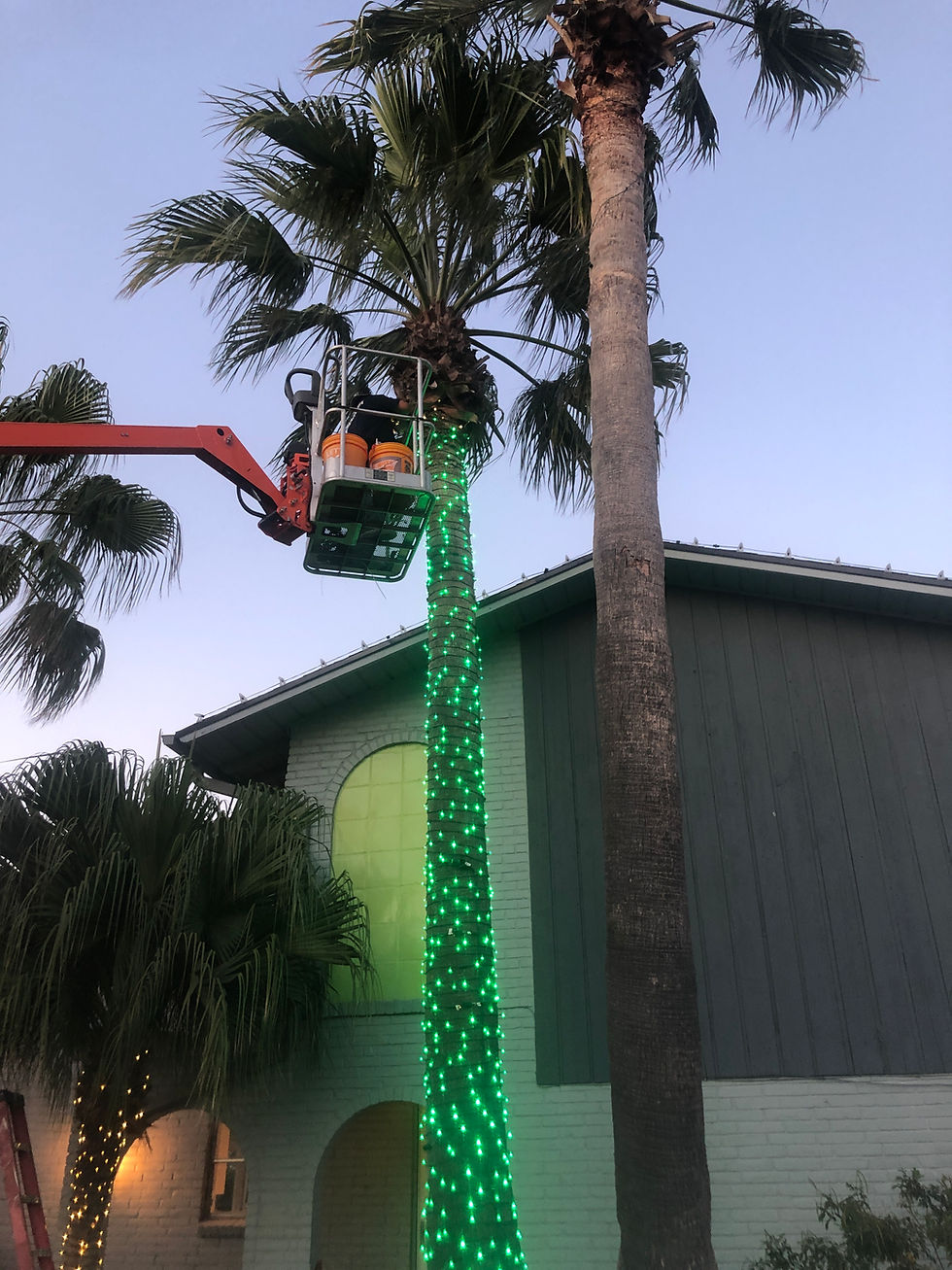
The Math: How Many Lights Does a Palm Need?
Most disappointing wraps come from running out of lights halfway up and stretching the spacing to compensate. Do the math first.
Feet of lights = (wrap height in inches / spacing in inches) x trunk circumference in feet.
Take a palm with 12 feet of trunk to wrap and a circumference of 4 feet. At 4-inch spacing, 144 inches divided by 4 gives 36 trips around the trunk. Thirty-six trips at 4 feet each is 144 feet of lights. A 50-light string with bulbs 6 inches apart is about 25 feet long, so that one palm takes six strings.
Spacing changes the look and the budget more than anything else:
2 to 3 inches: a solid column of light. This is the resort-entrance look.
4 inches: the standard. Full from the street, sensible on string count.
6 inches: a lighter spiral. Fine for a row of palms seen from a distance, thin on a single showpiece.
Whatever you choose, use the same spacing on every palm in view. Matching is what makes a row of palms look professional.
Choosing Lights That Survive the Coast
Use LED mini lights for trunks. The 5mm wide-angle style is the workhorse: bright from every direction, cool to the touch, and low enough in power draw that you can connect many strings on one run. Check the box for the maximum number of strings that can be connected end to end and stay under it.
Buy better than you think you need. Salt air finds every weak plug and socket, and a cheap string that works in the garage can fail within weeks outside. Look for sealed, one-piece bulbs and outdoor ratings. We cover what salt and wind do to a display in our guide to Corpus Christi Christmas weather and outdoor lights.
On color: warm white on the trunk is the classic and never looks dated. Green trunks with white or red accents read as Christmas from a block away. If you want the palms to change with the season, that is a job for RGB color-changing lighting. Our post on single-color versus multi-color lights walks through the choice.
How to Wrap a Palm Tree, Step by Step
Test every string on the ground. Plug them all in before anything goes on the tree. Finding a dead section 15 feet up is a bad afternoon.
Start at the bottom with the plug end. Leave the plug at the base where your power is, and work upward.
Anchor without piercing. Secure the first wrap to itself with a zip tie or outdoor-rated tape. No nails, no staples.
Wrap upward at even spacing. Keep the string snug enough to stay put but not stretched. Step back every few feet and check your lines from the street.
Connect as you climb. Plug each new string into the last, and seat every connection firmly.
Decide where to stop. The cleanest finish is right below the fronds or the old leaf bases. Tie off the last wrap the same way you started.
Power it safely. Use outdoor-rated extension cords and a GFCI-protected outlet, keep connections off the ground, and put the whole thing on a timer.
How to Stay Out of the Gone Wrong Photos
Those photos come down to proportion. A few rules keep the result elegant.
Wrap the full trunk or stop with intent. A wrap that ends at a random height looks unfinished. Take it to the fronds, or stop at the same deliberate height on every palm.
Look at what sits at the base. Two round, lit shrubs on either side of a lit column is the exact picture you are trying to avoid. Light the shrubs differently, light a bed instead, or leave the base dark.
Give the top something to do. A lit trunk under a dark crown looks cut off. One or two uplights aimed into the fronds finishes the tree.
Work in odd numbers and groups. Three palms wrapped alike look planned. One wrapped palm alone in a yard looks lonely.

What About the Fronds?
Lighting individual fronds is possible, and it is stunning on a date palm, but it means working at the very top of the tree in a lift, with every string exposed to constant movement. For most homes there is a better answer: wrap the trunk and wash the crown with light from below. Well-aimed fixtures in the ground make the fronds glow, and they keep working all year. That is standard landscape lighting work, and palms are the best subject for it on the coast.
When to Call a Crew
A six-foot pygmy date palm by the front door is a fine Saturday project. Hand it off when any of these are true:
The wrap goes higher than you can comfortably reach from a stepladder on level ground.
There are power lines anywhere near the crown.
You have more than three or four palms and want them to match.
It is a business, hotel, HOA entrance or public space, where the display has to look right every night of the season.
Tall palms are lift work. Our crew wraps them as part of holiday lighting for homes and commercial holiday lighting for businesses and neighborhoods, and we come back to take everything down. If you are on the fence, read 4 reasons hiring a Christmas lighting contractor is worth the money.
Taking the Lights Down
Do not leave seasonal strings on a palm all year. Sun and salt break down the wire, and old leaf bases shed and take strings with them. Unwrap from the top down, coil each string separately, and store them dry.
If you love the look and want it all year, use products built for it. Permanent lighting handles the house, and landscape or RGB fixtures handle the palms. We weigh the pros and cons in are permanent holiday lights worth it.
Frequently Asked Questions
How many lights do I need to wrap a palm tree?
Multiply the number of wraps by the trunk circumference. A palm with 12 feet of trunk and a 4-foot circumference needs about 144 feet of lights at 4-inch spacing, or roughly six 25-foot strings.
Do Christmas lights hurt palm trees?
LED lights will not harm a palm. They produce almost no heat. Damage comes from how lights are attached. Never use nails, staples or screws, because palm trunks cannot heal a wound, and remove seasonal lights after the holidays.
How far apart should lights be on a palm trunk?
Four inches between wraps is the standard. Use 2 to 3 inches for a dense showpiece look and up to 6 inches for a lighter spiral on palms seen from a distance.
Can I leave lights on my palm trees year-round?
Not seasonal strings. They are not built for a year of sun and salt. For year-round light, use landscape lighting or permanent color-changing fixtures designed to stay outside.
How much does it cost to have palm trees wrapped?
It depends on the height, the trunk size, the spacing and how many palms there are. Tall palms that need a lift cost more than ones reached from a ladder. Request a free quote and we will price your palms exactly.
See It Done Right
Want to see wrapped palms before you start? Our guide to where to see Christmas lights in Corpus Christi has plenty of them. And when you would rather watch from the driveway than the ladder, Showcase Decorative Lighting has been lighting the Coastal Bend since 2005. Get a free quote or call (361) 687-2763.
Source on palm trunk wounds: University of Georgia Cooperative Extension.


Comments