
Corpus Christi Christmas Weather and Your Outdoor Lights: Salt, Wind and Cold Fronts

Most Christmas lighting advice is written for places where the enemy is snow. Ours is not. On the Coastal Bend, December means shorts one day and a jacket the next, a breeze that never quite stops, and air you can taste. None of that shows up on the back of a box of lights, and all of it decides whether your display still looks good on Christmas Eve.
This is a local guide to Corpus Christi Christmas weather and what it does to outdoor lights, with the fixes we have learned from lighting this coast since 2005.
What Is Christmas Weather Like in Corpus Christi?
Mild, breezy and changeable. Late-December afternoons are typically in the 60s, with cooler nights. Then a cold front arrives, the wind swings to the north, and the temperature drops twenty degrees in an afternoon. Two days later it is warm again.
Humidity stays high, mornings are often foggy or heavy with dew, and Corpus Christi regularly shows up on lists of the windiest cities in the country. Rain is usually light this time of year. Snow is the stuff of legend: the Christmas Eve snowfall of 2004 officially put 4.4 inches on the ground, and people here still talk about it.
So the forecast for your lights is not ice and snow load. It is salt, wind, moisture and sun.
Salt: The Slow One
Salt is carried inland on the breeze and settles on everything, including the metal contacts inside plugs and sockets. It attracts moisture, and together they corrode. The first sign is a section of lights that flickers or goes dim. The second is a green or white crust on a plug.
Homes on North Padre Island, in Port Aransas, Rockport and Flour Bluff get the worst of it. Farther inland, in Calallen, Robstown or Alice, salt is less of a factor and wind takes over as the main concern.
Choose sealed, one-piece LED bulbs. If the bulb cannot be pulled out of the socket, salt cannot get in.
Keep connections tight and off the ground. A plug lying in wet grass is the first thing to fail.
Do not reuse corroded strings. A crusted plug will not get better in storage.
Wind: The Fast One
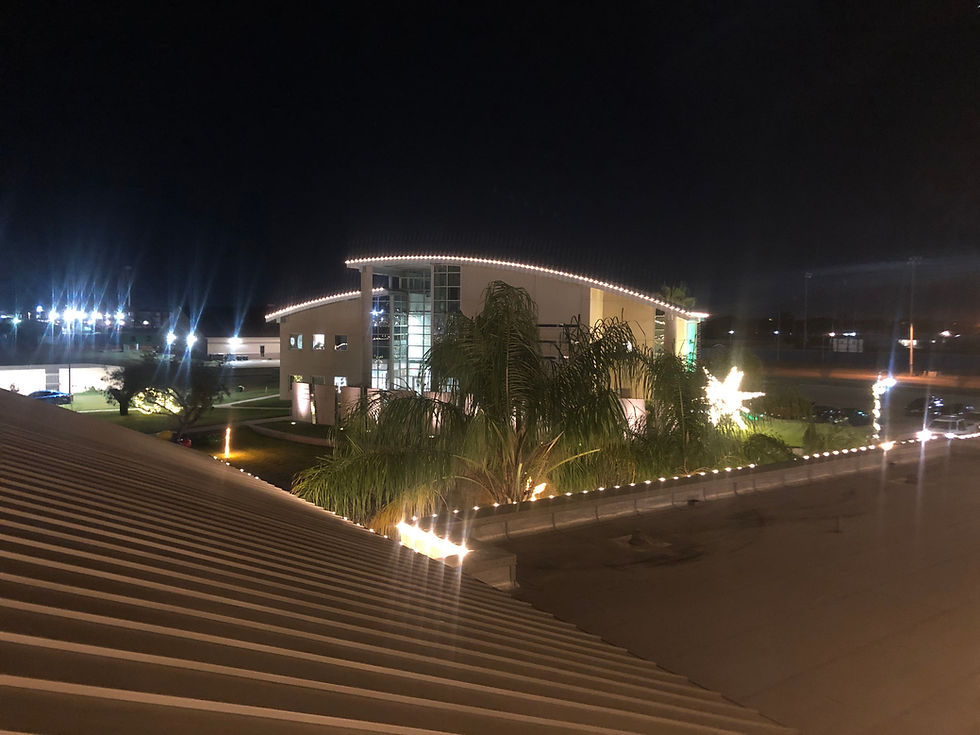
A steady sea breeze works on a display all day, every day. Clips loosen, strings sag, and anything that can swing will rub until the wire wears. Then a front comes through with strong gusts from the opposite direction and finishes the job.
Clip every bulb. Roofline lights held by a clip at each socket stay straight. Strings draped over gutters or stapled every few feet do not.
Leave no loose loops. Extra wire should be secured, not left to flap.
Think twice about inflatables. They are sails. If you use them, stake them at every tie-down point and bring them in when a front is on the way.
Give trees room to move. Palms and oaks sway. Wraps should be snug to the trunk, with a little slack where a string jumps from one branch to another. Our guide on how to wrap a palm tree with Christmas lights covers this in detail.
Moisture: The Sneaky One
It does not have to rain for your lights to get wet. Fog and dew soak a display most nights, and that moisture is why outdoor outlets trip.
If your lights go dark and the breaker is fine, look for the outlet with the test and reset buttons. That is a GFCI, and it shuts off power when it senses current leaking through moisture. It is doing its job. Reset it once the connections have dried. If it keeps tripping, a connection is sitting in water or a string is damaged.
Plug into GFCI-protected outlets only. Never defeat one to keep the lights on.
Use outdoor-rated cords and timers. Indoor power strips do not belong in the yard.
Raise connections off the ground and point them downward so water drains away.
For more on doing this safely, see 5 facts about holiday lighting that will keep you up at night.
Sun: The One Nobody Expects
South Texas sun is strong even in December. It fades cheap wire and makes plastic brittle, which is why bargain strings rarely survive a second season here. It is also the reason seasonal lights should come down in January. Six extra weeks of sun and salt take a full year off their life.
The Cold Front Checklist
Fronts are the main event of a Coastal Bend December. A little preparation saves a lot of repair.
Before: bring in inflatables and light yard pieces, and check that ground stakes are firm.
During: leave the lights on their timer. Do not go up a ladder in the wind to fix a sagging string.
After: walk the display in daylight. Look for sagging lines, clips that have let go, and connections that have pulled apart. Reset any tripped GFCI.
How to Build a Display That Lasts the Season
Put all of that together and a coast-ready display looks like this:
Commercial-grade LED lights with sealed bulbs.
A clip at every socket on the roofline.
Tight connections, raised off the ground.
Outdoor-rated cords, timers and GFCI protection.
Trees wrapped snugly, with nothing nailed or stapled into the trunk.
A walk-through after every front.
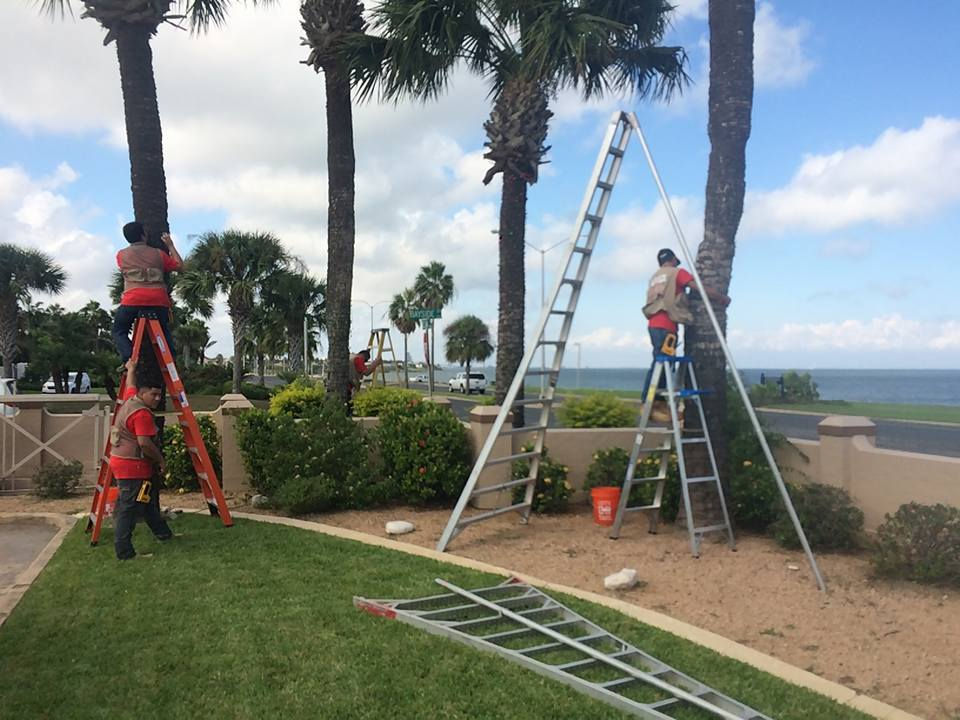
This is also where professional installation earns its money on the coast. Our crew uses commercial-grade products from the Christmas Decor franchise network, installs them to stay put in the wind, and takes everything down after the holidays. That applies to holiday lighting for homes and to commercial holiday lighting, where a dark section on a storefront is seen by every customer who drives past.
What About Year-Round Lighting?
Everything above applies twelve months a year to anything that stays outside. If you are considering lights that never come down, material quality matters even more. We cover the questions to ask in are permanent holiday lights worth it, and our permanent lighting and landscape lighting pages explain what we install for the coast. Patio string lights live in the same wind and salt, so bistro and patio lighting needs the same care.
Taking Lights Down on the Coast
Pick a dry day. Lights stored damp corrode in the bin.
Wipe plugs and connections to remove salt residue before storage.
Coil each string separately and label where it went.
Throw out anything corroded or brittle now, so you are not surprised next November.
Frequently Asked Questions
What is the weather like in Corpus Christi at Christmas?
Usually mild and breezy, with afternoons typically in the 60s and cooler nights. Cold fronts can drop temperatures quickly and bring strong north winds for a day or two.
Does it snow in Corpus Christi at Christmas?
Almost never. The famous exception was Christmas Eve 2004, when the city officially recorded 4.4 inches.
Do Christmas lights rust in salt air?
The metal contacts in plugs and sockets corrode in salt air, which causes flickering and dead sections. Sealed LED bulbs and tight, raised connections slow it down a great deal.
Why do my outdoor Christmas lights keep tripping the outlet?
Moisture. Fog, dew or rain has reached a connection or a damaged string, and the GFCI outlet has cut power for safety. Let things dry, raise connections off the ground, and replace any damaged strings.
Can Christmas lights stay on in the rain?
Outdoor-rated lights on a GFCI-protected circuit are made for rain. Indoor lights and indoor extension cords are not, and should never be used outside.
How windy is too windy to hang Christmas lights?
If the wind is moving the ladder or you have to hold on with one hand, stop. Wait for a calm morning, or leave roof and tree work to a crew with the right equipment.
Let the Weather Be Someone Else's Problem
You can do everything in this guide yourself, and plenty of people do. If you would rather enjoy the season from the ground, Showcase Decorative Lighting designs, installs and removes displays across the Coastal Bend, and we are fully insured. Request a free quote or call (361) 687-2763.
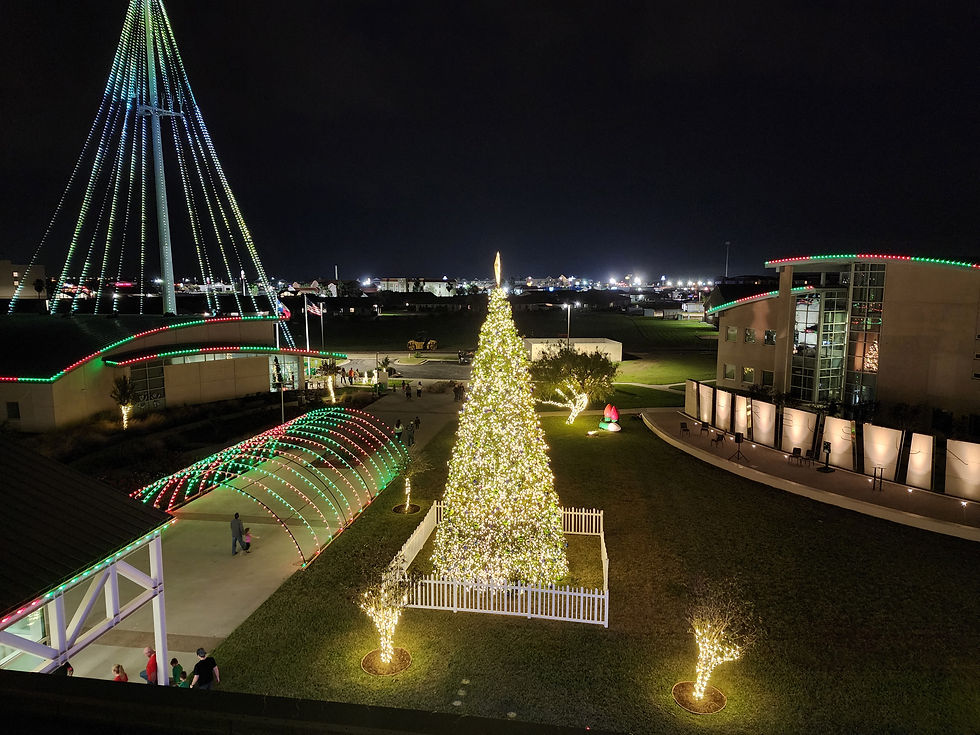
In the meantime, pick a calm night and go see how the best displays in town handle the coast. Our guide to where to see Christmas lights in Corpus Christi will get you started, and our roundup of outdoor holiday lighting trends has ideas for your own.
Source for the 2004 snowfall: KRIS 6 News, The Christmas Miracle of 2004.

Comments