
10 Outdoor Lighting Tips for a Safer Home

Updated: 5 days ago
Good outdoor lighting does two jobs at once. It makes a home look its best after dark, and it makes the property safer: for the people who live there, for guests finding the front door, and against anyone who would rather not be seen.
Safety lighting does not have to look like a parking lot. The ten tips below show how to light a home so it is easier to move around, harder to approach unnoticed, and still inviting from the street.
1. Decide What Each Light Is For
Before buying a single fixture, walk the property at night and list the jobs. Most homes have three: light for moving around safely, light that removes hiding places, and light that makes the house look good. One fixture can sometimes do two of those, but a plan that names the purpose of each light is always better than adding fixtures until it feels bright.
2. Match the Fixture to the Job
Each type of outdoor light does something different.
Path lights mark walkways and edges at ankle to knee height.
Step lights sit in or beside stairs so every tread is visible.
Uplights wash walls, columns and trees from below.
Downlights mounted in eaves or trees cast a soft, moonlit pool on the ground.
Floodlights cover a wide area and are best on a motion sensor.
String lights define a patio or seating area.
A safe yard uses several of these together. Our landscape lighting page shows how they combine on real properties.

3. Light the Places People Trip
Falls are the everyday safety problem that lighting solves. Give priority to steps, changes in level, the edges of decks and docks, the path from the driveway to the door, and anywhere the surface changes from concrete to gravel or grass. Aim the light at the ground, not at eye level. If you can see the bulb, it is working against you.
4. Light the Places People Hide
For security, think about entry points and shadows: the front and back doors, the garage, side gates, ground-floor windows, and the dark side of the house that faces no neighbor. The goal is not daylight. It is to leave no deep pocket of shadow next to a door or window.
5. Aim for Even Light, Not Bright Light
One very bright floodlight makes security worse. Your eyes adjust to the bright spot, and everything outside it turns black. Several lower-output fixtures spread across the yard let you see the whole property. Soft and even beats harsh and patchy, and it looks far better too.
6. Put the Lights on Timers and Sensors
Lighting only helps if it is on. A timer or photocell turns the system on at dusk without anyone remembering to do it, which matters most when you are away. Motion sensors suit floodlights at side yards and back corners, where a sudden light draws attention to movement.
7. Choose the Right Color of White
Warm white, around 2700K to 3000K, is comfortable and flattering on homes and landscaping, and it is the usual choice for living areas and architecture. Cooler white, 4000K and up, looks brighter and suits task areas such as a driveway or work space. Pick one for each zone and keep it consistent. Mixed color temperatures make a property look unplanned.
8. Know What Solar Can and Cannot Do
Solar path lights are inexpensive and need no wiring, which makes them tempting. They are fine as markers along a garden bed. They are less dependable for safety, because output drops through the night and after cloudy days. For steps, entries and security, low-voltage LED lighting on a transformer is brighter and far more consistent.
9. Use Controls You Will Actually Use
Dimmers let you turn a patio down for an evening outside and back up when you need to see. App-based systems go further: schedules, zones, and the ability to switch lights on from another city so the house does not look empty. The same idea drives permanent lighting on the roofline, which can run as a soft white security outline most nights and switch to color for holidays. We weigh that option in are permanent holiday lights worth it.
Cameras work alongside all of this. A camera sees far more under even lighting than it does in the dark or in the glare of a single floodlight.

10. Maintain It, Especially Near Salt Water
Outdoor lighting lives outside, and on the coast that is hard duty. A short routine keeps it working:
Wipe lenses a few times a year. Salt film and dirt cut output noticeably.
Trim plants that have grown over fixtures.
Straighten fixtures that mowers, pets or storms have knocked out of aim.
Check connections for corrosion, and replace failed lamps promptly.
Fixture material matters as much as upkeep here. Brass and copper hold up to salt air far better than painted aluminum. Our guide to Corpus Christi weather and outdoor lights explains what the coast does to anything electrical left outdoors.
A Simple Plan to Start With
If ten tips feel like a lot, start with three zones and add from there:
The approach: driveway, front path and front door.
The steps: every stair and level change on the property.
The dark side: the side yard or back corner that currently has no light.
Those three cover most of the safety benefit. Trees, architecture and patio lighting can follow, including bistro and patio lighting for the spaces where you spend evenings.
Frequently Asked Questions
Does outdoor lighting really make a home safer?
It makes a home safer to move around after dark, which prevents trips and falls, and it removes the shadows near doors and windows that give someone cover. It works best as one part of home security, alongside locks, cameras and good habits.
Should security lights stay on all night?
Low-level landscape and entry lighting can run from dusk to bedtime or all night at very little cost with LED. Bright floodlights are better on motion sensors, so they come on only when something moves.
What color light is best for outdoor security?
Warm white is comfortable and shows people and objects clearly. Cooler white looks brighter and suits driveways and work areas. Even coverage matters more than color.
Are LED landscape lights expensive to run?
No. LED fixtures draw very little power. According to the U.S. Department of Energy, LEDs use at least 75 percent less energy than incandescent lighting.
Get a Lighting Plan for Your Property
Showcase Decorative Lighting designs and installs outdoor lighting across Corpus Christi and the Coastal Bend. We are fully insured and have been lighting homes and businesses here since 2005. See our landscape lighting service, or request a free quote and we will walk the property with you.
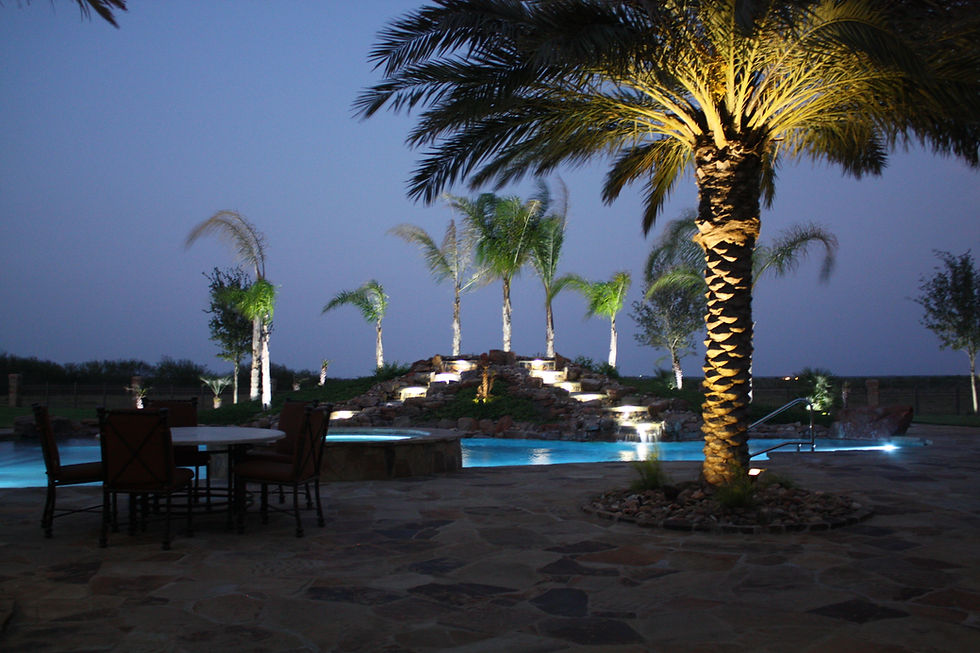


Outdoor lighting plays a crucial role in enhancing the security of your home by deterring intruders and improving visibility around your property. By strategically placing lights in key areas like entrances and walkways, you can create a safer environment while also adding to the curb appeal of your home. I highly suggest the Akari lamp for creating a warm and inviting ambiance: https://hugacollective.com/collections/akari-lamps